LEXINGTON, MA • FAMILY OWNED SINCE 1972
Basement Waterproofing &
Foundation Repair
In Lexington
Granite ledge under the hills, brooks and wet meadows in the low ground, mid-century foundations now 70 years old, and a teardown boom changing how water moves from lot to lot. Keller has been keeping New England basements dry for over 55 years, and we know exactly what your Lexington home is up against.
The Keller Difference
- No Subcontracting, Direct Service
- Family-Owned, Owner-Involved
- Over 55 Years In New England
- Honest Assessments, Fair Pricing
- Lifetime Transferable Warranty
PROUDLY SERVING LEXINGTON NEIGHBORHOODS
Lexington Center
East Lexington
North Lexington
Meriam Hill
Six Moon Hill
Five Fields
Peacock Farm
Turning Mill
Countryside
Why Lexington Homes
Have Wet Basements
THE LEDGE
Rock Below, Water Sideways
Parts of Lexington sit on granite ledge close to the surface. At Six Moon Hill, the ledge shows up outside the houses and sometimes inside them. Where rock is that close, rain can’t soak downward. It runs sideways along the ledge, straight toward any foundation in its path.
THE WETLANDS
Brooks & Wet Meadows
Vine Brook rises in wetlands off Marrett Road and runs north through Lexington Center, and in March 2010 it nearly submerged North Street. Arlington’s Great Meadows, a 183-acre wet meadow, sits inside Lexington. Homes near this low, wet ground deal with seasonally high groundwater.
THE BUILDING BOOM
Bigger Houses Next Door
Lexington saw 595 homes torn down between 2010 and 2017, many replaced by houses twice the size. Larger roofs, wider driveways, and regraded lots send more water somewhere, and sometimes that somewhere is the older house next door.
Keller’s interior, exterior, and multi-step waterproofing systems are built for exactly these conditions, and they are backed by our lifetime transferable warranty.
What We Fix
In Lexington
LEDGE, WETLANDS & RUNOFF
Basement Waterproofing
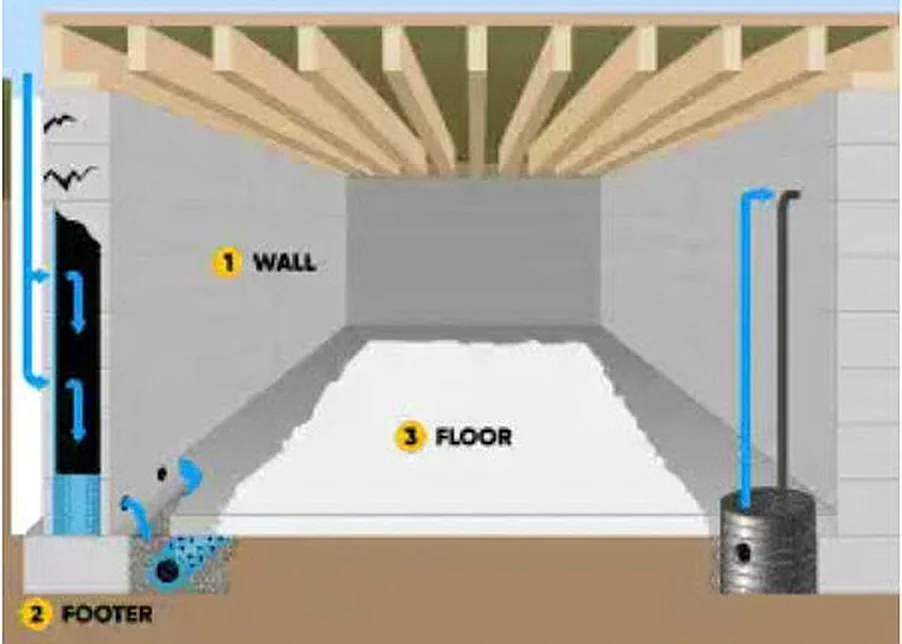
Whether water is running along the ledge or rising from the wetlands, an interior drainage system with a properly sized sump pump collects it before it reaches your floor.
- Interior drainage & sump systems
- Exterior excavation & wall sealing
- Battery backup pumps for storm outages
MID-CENTURY CONCRETE & BLOCK
Foundation Repair
More than a third of Lexington homes were built between 1940 and 1969, mostly on poured concrete and concrete block. After 60 to 80 years, those walls crack, bow, and leak at the seams. We repair them permanently.
- Crack injection for poured concrete walls
- Steel I-beams & anchors for bowing block walls
- Helical & push piers for settlement
WHEN THE NEIGHBORHOOD CHANGES
Yard Drainage & Grading
When the lot uphill gets a new house, the water that used to soak into its lawn has to go somewhere. We intercept it and carry it away from your foundation.
- French drains to intercept runoff from uphill
- Regrading away from the foundation
- Downspout burial & gutter solutions
STONE WALLS & OLD COLONIALS
Masonry Repair
From fieldstone foundations under Lexington’s oldest colonials to chimneys, steps, and the stone walls that cross its neighborhoods, we restore masonry worn down by New England freeze-thaw.
- Repointing fieldstone & brick foundations
- Front step & stoop repair
- Chimney base & retaining wall repair
Plus: basement windows, bulkheads & egress. That includes code-compliant egress windows for basements being turned into living space, plus replacement of old steel windows and rotted bulkhead doors, two of the most common water entry points in Lexington homes.
THE MID-CENTURY BASEMENT
Built In The 1950s
Aging Into Problems
Lexington is known for its mid-century neighborhoods. Six Moon Hill was built between 1947 and 1953 on a rocky hill, and Five Fields and Peacock Farm followed, with houses set into the terrain. Across town, more than a third of all homes went up between 1940 and 1969. Their poured concrete and block foundations are now 60 to 80 years old.
At that age, concrete has shrunk and cracked, block walls start to bow under soil pressure, and the seam where the floor meets the wall opens up. Houses set into a hillside take groundwater against the uphill wall with every storm. The fix depends on the wall: crack injection for poured concrete, anchors or beams for bowing block, and interior drainage where water comes in at the base. Our repairs are permanent, not patches, and our lifetime transferable warranty stays with the house when it sells.
Why Lexington Homeowners Choose Keller
- No Subcontracting, Direct Service
- Family-Owned, Owner-Involved
- Over 55 Years Experience
- Honest Assessments, Fair Pricing
- Professional Repairs That Last


Things Lexington Homeowners Ask Us
Our house sits on ledge. Why does water come in when it rains?
Ledge acts like a sloped floor under your yard. Rain can’t soak down into the rock, so it runs along the surface of the ledge until it hits something, often your foundation wall. That’s why some Lexington homes get water on one side of the basement every storm. An interior drainage system along that wall with a sump pump collects it, and exterior drainage can intercept it before it arrives.
We live near Vine Brook or the Great Meadows and the basement is damp every spring. Why?
Homes near brooks and wetlands sit on seasonally high groundwater. In spring, the water table rises toward your basement floor and creates pressure from below, no rainstorm required. An interior drainage system with a properly sized sump pump manages that pressure year after year, and a battery backup keeps it running through storm outages.
Since the new house went up next door, our yard and basement are wetter. Is that possible?
Yes. A bigger roof, a wider driveway, and a regraded lot all change where stormwater goes, and it has to go somewhere. If that somewhere is now your property, the fix is intercepting it: French drains, regrading, and downspout management that redirect the water before it reaches your foundation. We evaluate the whole lot during your free estimate.
Our block foundation has a horizontal crack and the wall leans in. Is that serious?
It can be. A horizontal crack in a concrete block wall, especially with bowing, usually means soil pressure is pushing the wall inward. It should be looked at before it gets worse. We stabilize bowing walls with steel I-beams or wall anchors, and we’ll tell you honestly whether yours needs it now or just needs watching.
We're planning to finish our basement. What should we do first?
Waterproof it before a single stud goes up. Once walls are framed and finished, water problems stay hidden until they’ve already done expensive damage. An interior drainage system, a properly sized sump pump, and sealed walls cost a fraction of redoing a finished basement. We’ll inspect the space free of charge and tell you honestly whether it’s ready to finish.
How much does basement waterproofing cost in Lexington?
It depends on the source of the water, your foundation type, and the right system for your home. That is why we start with a free on-site inspection and a written, no-obligation quote. No pressure and no gimmicks, just an honest assessment from a local family business.