
PLYMOUTH, MA • FAMILY OWNED SINCE 1972
Basement Waterproofing &
Foundation Repair
In Plymouth
Hundreds of ponds, sandy soil over a 140-square-mile aquifer, and a coastline where nor’easters move whole beaches. Keller has been keeping New England basements dry for over 55 years, and we know exactly what your Plymouth home is up against.
The Keller Difference
- No Subcontracting, Direct Service
- Family-Owned, Owner-Involved
- Over 55 Years In New England
- Honest Assessments, Fair Pricing
- Lifetime Transferable Warranty
PROUDLY SERVING PLYMOUTH NEIGHBORHOODS
Plymouth Center
North Plymouth
West Plymouth
South Plymouth
Chiltonville
Manomet
White Horse Beach
Priscilla Beach
Cedarville
Ellisville
The Pinehills
Long Pond
Billington Sea
Why Plymouth Homes
Have Wet Basements
THE PONDS
Living On The Water Table
Plymouth has about 450 ponds, and most of them are ringed by homes. The town sits on the Plymouth-Carver aquifer, and its ponds are where that groundwater reaches the surface. Near a pond, bog, or wetland, your basement floor sits close to the water table, and spring brings dampness even without rain.
THE SAND
Water Goes Straight Down
Plymouth’s native soil is sand and gravel left by the glaciers, and it drains fast. That sounds like good news, but water from a downspout or a low spot drops straight down the outside of your foundation to the footing. On a pond lot, that is exactly where it meets the water table.
THE COAST
Storms That Move Beaches
The March 2018 nor’easters lowered parts of Plymouth Long Beach by 8 to 10 feet, the barrier that shelters the harbor and downtown waterfront. Along the shore in Manomet, White Horse Beach, and Priscilla Beach, storm tides push salt water and saturated ground right up to the foundation.
Keller’s interior, exterior, and multi-step waterproofing systems are built for exactly these conditions, and they are backed by our lifetime transferable warranty.
What We Fix
In Plymouth
POND LOTS & HIGH GROUNDWATER
Basement Waterproofing
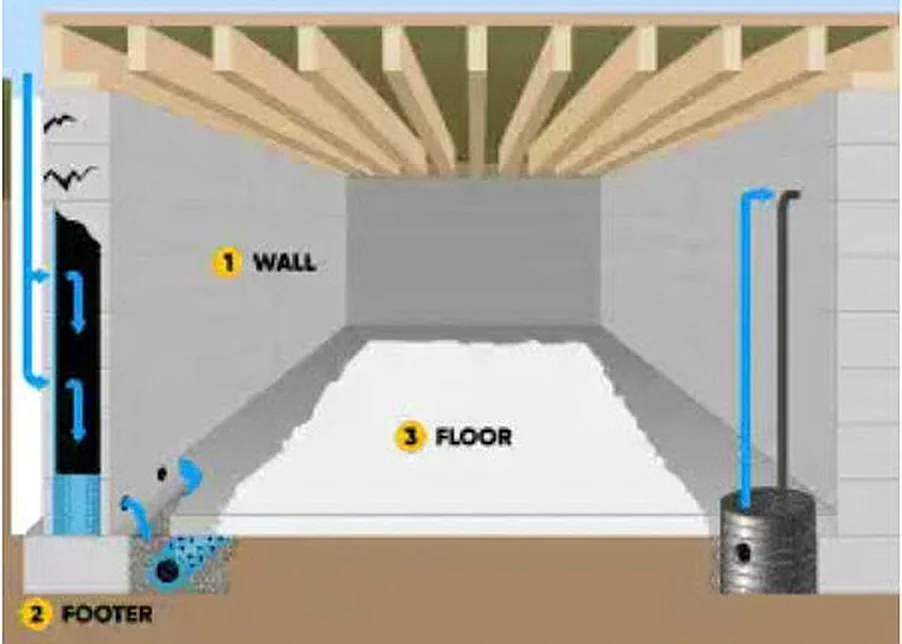
When groundwater rises from below, sealing the walls is not enough. An interior drainage system with a properly sized sump pump relieves the pressure before water comes through the floor or the floor-wall seam.
- Interior drainage & sump systems
- Battery backup pumps for storm outages
- Exterior excavation & wall sealing
POURED CONCRETE & BLOCK
Foundation Repair
Most Plymouth homes were built in 1970 or later, on poured concrete or block. Those walls develop shrinkage cracks, leaking tie-rod holes, and bowing block. We repair them permanently.
- Crack injection for poured concrete walls
- Steel I-beams & anchors for bowing block walls
- Helical & push piers for settlement
DOWNSPOUTS & LOW SPOTS
Yard Drainage & Grading
In sandy soil, every downspout that empties beside the house sends water straight to your footing. We carry roof and surface water away from the foundation and fill the low spots that collect it.
- Downspout burial & gutter solutions
- Regrading away from the foundation
- French drains & sub-surface drainage
SALT AIR & OLDER STONE
Masonry Repair
Chimneys, steps, and the older stone and brick foundations of North Plymouth and downtown take a beating from salt air and New England freeze-thaw. We restore their strength and appearance.
- Repointing stone & brick foundations
- Front step & stoop repair
- Chimney base & retaining wall repair
Plus: basement windows, bulkheads & egress. That includes code-compliant egress windows for basements being turned into living space, plus replacement of rusted steel windows and rotted bulkhead doors, two of the most common water entry points in Plymouth homes.
ONE TOWN, MANY KINDS OF BASEMENTS
From Mill Duplexes
To The Pinehills
Plymouth covers 134 square miles, the most of any town in Massachusetts, and its basements are as varied as its villages. In North Plymouth, the Plymouth Cordage Company built two-family houses for its workers starting in 1899, and about 120 of them are still standing on foundations more than a century old. Around the ponds, homes sit close to the water table. In newer neighborhoods, poured concrete walls show the cracks and seam leaks that come with age.
That is why we don’t sell one system for every house. We inspect first, find out whether the water is coming from rising groundwater, surface runoff, or a crack in the wall, and recommend the repair that fixes that problem. Keller has been doing this work across New England for over five decades. Our repairs are permanent, not patches, and our lifetime transferable warranty stays with the house when it sells.
Why Plymouth Homeowners Choose Keller
- No Subcontracting, Direct Service
- Family-Owned, Owner-Involved
- Over 55 Years Experience
- Honest Assessments, Fair Pricing
- Professional Repairs That Last


Things Plymouth Homeowners Ask Us
We live on a pond and the basement gets wet every spring. Why?
Plymouth’s ponds are connected to the groundwater beneath the town. When the water table rises in spring, it rises under your house too, pressing up through the slab and in at the floor-wall seam. No rain is required. An interior drainage system with a properly sized sump pump relieves that pressure year after year, and a battery backup keeps it running when storms knock out the power.
Our house is only 20 or 30 years old. Why is the basement leaking?
Newer doesn’t mean waterproof. Poured concrete shrinks as it cures and keeps moving with the seasons, so most foundations develop cracks over time. The floor-wall seam, tie-rod holes, and pipe penetrations are other common entry points. These are usually very fixable, and we’ll show you exactly where the water is getting in during your free estimate.
Can you fix cracks in a poured concrete foundation?
Yes. Cracks in poured concrete walls can be sealed by injecting them from the inside, filling the crack through the full thickness of the wall so water can’t follow it in. If the crack is structural, or the wall is bowing, we’ll tell you and recommend the right reinforcement instead of just sealing over it.
Our soil is sandy. Doesn't that drain water away from the house?
Sand drains water down, not away. Rain and roof runoff that land next to the house drop straight to the footing, and if the water table is high, as it is near Plymouth’s ponds and wetlands, that water has nowhere to go but in. Burying downspouts, filling low spots, and grading the ground away from the foundation keep much of it from ever reaching your walls.
We're near the water in Manomet or White Horse Beach. What can you protect against?
To be straight with you, no basement system stops storm surge that comes over the beach. What we can do is manage the groundwater and seepage that come with coastal storms and high tides, using interior drainage, a properly sized sump pump, and a battery backup. We also repair masonry worn down by salt air.
How much does basement waterproofing cost in Plymouth?
It depends on the source of the water, your foundation type, and the right system for your home. That is why we start with a free on-site inspection and a written, no-obligation quote. No pressure and no gimmicks, just an honest assessment from a local family business.