QUINCY, MA • FAMILY OWNED SINCE 1972
Basement Waterproofing &
Foundation Repair In Quincy
The Granite City sits where the land meets Boston Harbor — low-lying coastal neighborhoods, a high water table, and older homes on granite and stone foundations. Keller has been keeping New England basements dry for over 55 years, and we know exactly what your Quincy home is up against.
The Keller Difference
- No Subcontracting, Direct Service
- Family-Owned, Owner-Involved
- Over 55 Years In New England
- Honest Assessments, Fair Pricing
- Lifetime Transferable Warranty
PROUDLY SERVING QUINCY NEIGHBORHOODS
Wollaston
North Quincy
Quincy Point
Houghs Neck
Squantum
Merrymount
Adams Shore
Germantown
West Quincy
Marina Bay
Why Quincy Homes
Have Wet Basements
THE COAST
Storms & Surge
Nor’easters and coastal storms push water inland through low-lying neighborhoods like Houghs Neck, Adams Shore, and Germantown. When a storm lines up with a high tide, the ground saturates fast — and basements are the first place it shows.
THE GROUND
High Water Table
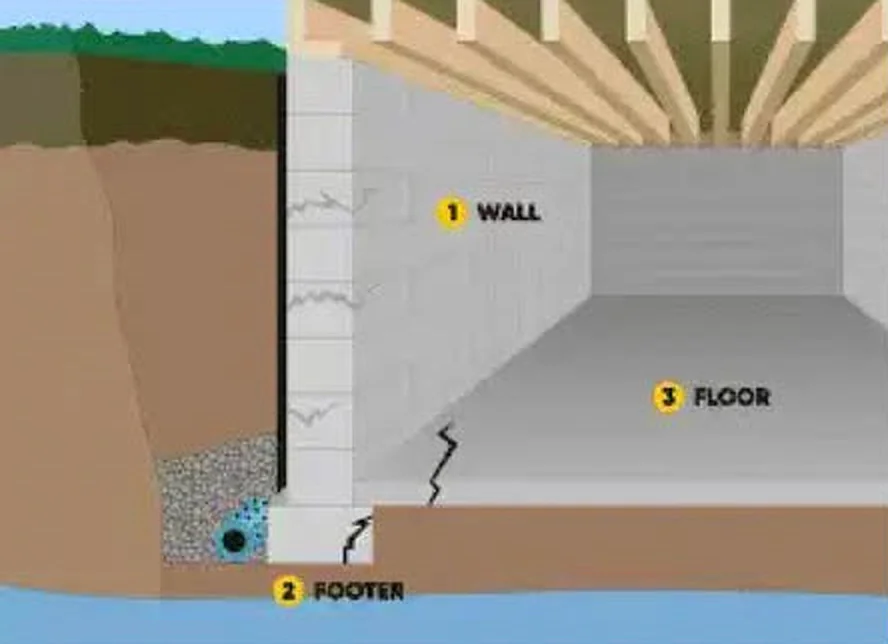
Much of Quincy sits barely above sea level on coastal clay, marsh, and filled land. The water table is close to your basement floor year-round — so even modest rain can create hydrostatic pressure under the slab and at the floor-wall seam.
THE LEDGE
Granite Below
Quincy is the Granite City for a reason — and where granite ledge sits near the surface, especially around West Quincy, groundwater can’t soak downward. It moves sideways instead, straight toward any basement in its path.
Keller’s interior, exterior, and multi-step waterproofing systems are engineered for exactly these conditions — backed by our lifetime transferable warranty.
What We Fix
In Quincy
KEEP IT DRY
Basement Waterproofing
With Quincy’s water table, a properly sized sump system isn’t optional — it’s the heart of a dry basement.
- Interior drainage & sump systems
- Exterior excavation & wall sealing
- Multi-step hybrid protection
GRANITE & STONE EXPERTS
Foundation Repair
Permanent structural repairs for Quincy’s granite block, fieldstone, brick, and poured foundations.
- Repair methods matched to granite & stone walls
- Steel I-beams & anchors for bowing walls
- Helical & push piers for settlement
COASTAL LOT DEFENSE
Yard Drainage & Grading
On Quincy’s flat, low-lying lots, water has nowhere to go on its own — we give it somewhere better than your basement.
- Regrading away from the foundation
- French drains & sub-surface drainage
- Downspout burial & gutter solutions
SALT AIR & STONE
Masonry Repair
Salt air and freeze-thaw are hard on mortar. We restore strength and appearance to granite, stone, and brick.
- Repointing granite & brick foundations
- Rebuilding damaged stone & brick walls
- Chimney base & step repair
Plus: basement windows, bulkheads & egress — we replace old steel windows and rotted bulkhead doors, two of the most common water entry points in Quincy homes.
THE GRANITE CITY’S FOUNDATIONS
Built On Granite —
Aging Like Stone
Quincy’s older housing stock — the pre-war homes and triple-deckers of Wollaston, North Quincy, and Quincy Point — often sits on granite block and stone foundations built when the city’s quarries were still running. The stone itself is nearly indestructible. The mortar holding it together is not.
A century of coastal moisture, salt air, and freeze-thaw cycling erodes those joints, letting water seep through and slowly loosening the wall. And because stone foundations can’t be injected like poured concrete, they need the right repair: exterior elastomeric membrane sealing, interior drainage systems with liners, and careful repointing. Keller has worked on New England stone foundations for over five decades — repairs are permanent, not patches, and covered by a lifetime transferable warranty that adds real value when it’s time to sell.
Why Quincy Homeowners Choose Keller
- No Subcontracting, Direct Service
- Family-Owned, Owner-Involved
- Over 55 Years Experience
- Honest Assessments, Fair Pricing
- Professional Repairs That Last


Things Quincy Homeowners Ask Us
My Quincy home has a granite or stone foundation. Can it actually be waterproofed?
Yes — but not with injection methods made for poured concrete. Stone and granite block walls are made of many pieces held together with porous mortar, so they’re best sealed from the exterior with a flexible elastomeric membrane, or protected from the interior with a drainage system and liner that captures seepage and directs it to a sump. Keller has been waterproofing New England stone foundations for over five decades.
Why does my basement get wet during coastal storms even when it isn't raining hard?
In low-lying neighborhoods like Houghs Neck, Adams Shore, and Germantown, storm surge and high tides push the groundwater level up from below. Your basement doesn’t need rain overhead — rising water under and around the foundation creates hydrostatic pressure that finds every crack and seam. An interior drainage system with a properly sized sump pump is built for exactly this.
My lot is completely flat. Can grading really help?
Flat, low-lying lots are actually where drainage work matters most — water that can’t run off soaks straight down beside your foundation. Even modest regrading, downspout burial, and a French drain system can redirect a surprising amount of water. During your free estimate we evaluate the whole property and give you options, not a one-product pitch.
Do I need a battery backup for my sump pump in Quincy?
We strongly recommend it. The same nor’easters that raise the water table are the storms most likely to knock out power — which means your pump can quit at the exact moment you need it most. A battery backup keeps the system running through an outage and is one of the most cost-effective protections a coastal homeowner can add.
How much does basement waterproofing cost in Quincy?
It depends on the source of the water, your foundation type, and the right system for your home — which is why we start with a free on-site inspection and a written, no-obligation quote. No pressure, no gimmicks — just an honest assessment from a local family business.
Should I fix all my cracks at once or just the leaking ones?
Fix them all at once. Here’s why:
All cracks eventually leak. Fixing only the leaking ones just delays the inevitable, and costs more because you have to pay more than once to bring the repairman out again.
Water seeks the path of least resistance. If there are multiple cracks some will provide less resistance to the water than others so they leak first. Once the cracks are sealed, the water will look for the next easiest path which is typically the cracks that weren’t previously leaking.
Save money: When you are having cracks repaired, take advantage of quantity discounts usually available and have them all fixed at once.