Water Problems Rarely Start Where They Appear
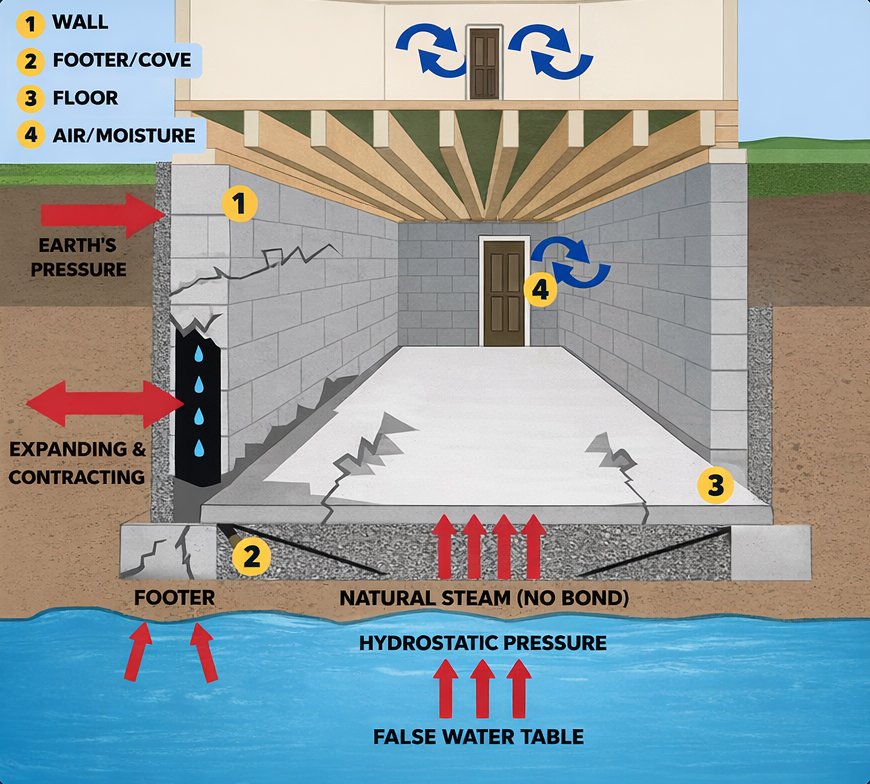
That damp spot on the wall? The peeling paint? The musty smell? What you see is often just the surface symptom of a much larger moisture pattern. Water can enter through walls, floors, footers, and even air movement. Fixing one visible issue without evaluating the others can shift the problem instead of solving it.
COMMON WARNING SIGNS
Damp Spots On Walls
An unpainted block will turn dark gray when it’s wet. A painted wall will show discoloration, or a darkening of the paint. A poured wall might show discoloration. In any case, there might be white or dark outlines surrounding the area, which means that either leaked before, or substantial moisture has come through in that area.
Mold and Mildew
Mold and mildew are living, breathing organisms that grow and multiply anywhere there is excessive moisture. For those of us exploring our basements, mold and mildew can grow in the walls, carpeting, furniture, or anywhere else it can find a food source.
Peeling Paint
Sometimes paint gets old. When it does it can peel off the surface it was painted on, like the peeling paint you may see on old homes. But it doesn’t peel off just because its old. It can also peel off because:
It was the wrong paint.
The surface wasn’t properly prepared.
There is dampness or moisture in the wall you are trying to paint.
Paint will not stick to damp surfaces. It’ll discolor, or peel off much sooner than it should.
Rust On Appliances
Metal is susceptible to rusting when there is excessive moisture. The rust may begin on fuse boxes, washers or dryers, or other metal appliances due to dampness. Once it happens, you have to completely remove the rust and repaint as soon as possible, and then look for the cause of the moisture. If not, the rust will reappear.
Musty Odors
Musty odors are merely the result of the decay process associated with mold, mildew and dry rot. It is the odor given off by the decaying material. Once you smell it, look for the source, and try cleaning any item that has the smell. If it returns, you’ll need to replace it.
Dry Rot
This can appear as a brownish-black fungus growth on walls, clothing and other surfaces; it typically grows on wood surfaces. Keep in mind that dry rot is a byproduct of the decaying process — you’ll need to not only replace whatever is damaged, but also find and cure the cause of the dry rot forming in the first place.
Chalky White Substance
Concrete is made up of limestone, clay and mortar, and aggregate (stone). That white outline or spot you see is the calcium in the block leaching out. It’s an indication of water, excessive moisture, and is something you should pay attention to. It’s called efflorescence.
Bugs and Pests
Common pests and bugs found in basements are silverfish, centipedes, spiders, crickets, millipedes, ants, earwigs, and termites. Bugs and pests enter foundations through cracks, floor drains, and other structural defiant areas.
NOTICING ANY OF THESE SIGNS?
Don't wait until your foundation is compromised. If you recognize any of these common indicators of moisture intrusion, call us for a free inspection and solve the underlying issues before they become costly structural disasters.!


Schedule Your No Obligation Free Estimate Today!
When you need experience, we have you covered.
- No Subcontacting, Direct Service
- Family-Owned, Owner-Involved
- Over 50 Years Experience
- Honest Assessments, Fair Pricing
- Professional Repairs That Last