
Proudly Serving All Of New England Since 1972!
Discover Your Basement Waterproofing Options
50+
Years of Experience
FREE
Estimates
LIFETIME
Warranty
LOCAL
Owened & Operated
ULTIMATE PROTECTION
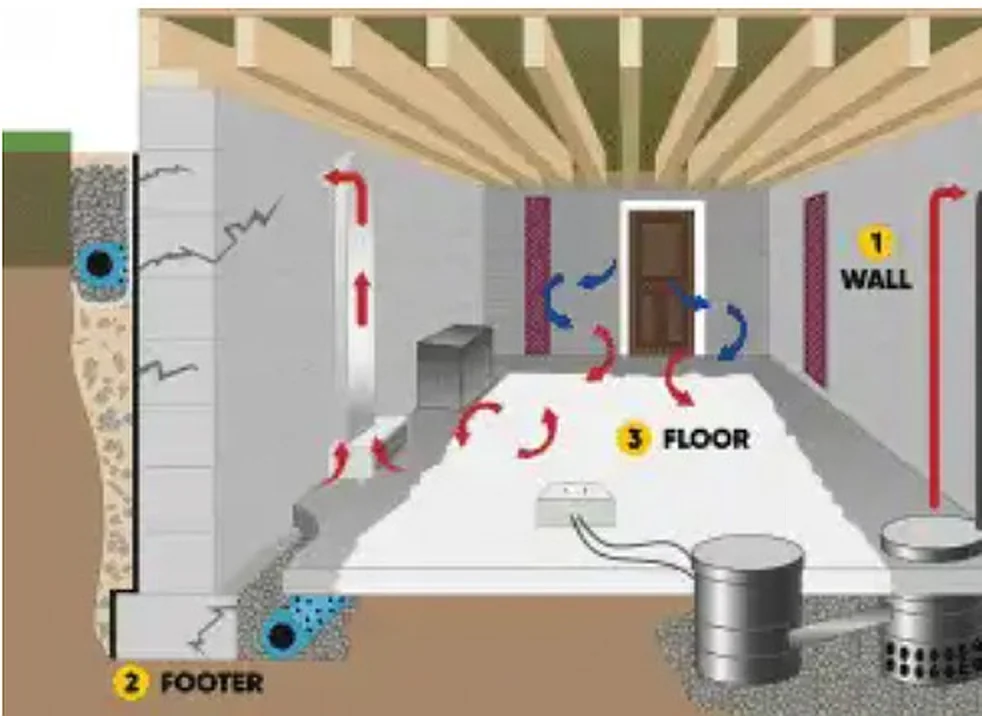
Multi-Step Waterproofing
System
Our most comprehensive solution addresses water issues from every angle. This hybrid approach ensures long-term structural integrity and a dry basement environment.
Exterior
- Outside walls opened by hand and inspected for cracks
- Cracks are dug out and sealed
- Sub-surface drain installed to prevent surface water runoff
- Drain surrounded by gravel, dirt replaced
- All above-grade cracks and windows sealed
Interior
- All wall cracks sealed for structural integrity
- Inspection trench opened; footers inspected and reinforced
- Sub-floor drainage system installed; concrete floor replaced
- Perforated plastic crock installed, packed in gravel with safety lid
- Pressure relief system installed to lower water levels beneath the floor
EXTERNAL DEFENSE
Exterior Waterproofing
System
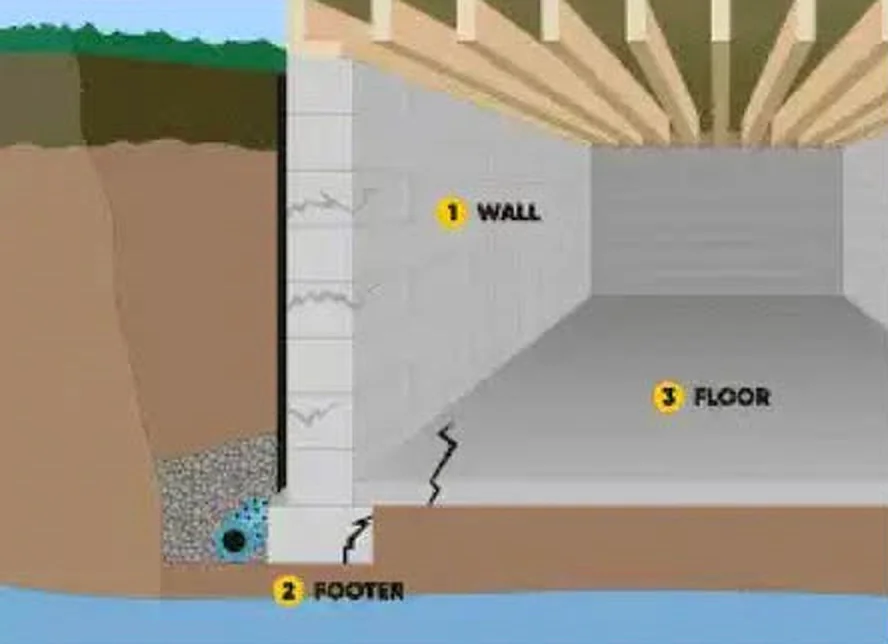
Stop water before it ever touches your foundation. Our exterior method focuses on keeping the perimeter of your home dry and secure.
- Excavation consists of digging all the dirt that sits by the walls down to the footer level.
- Replacing the footer tiles
- Sealing the walls
- Covering with gravel
- Backfilling with soil to grade level
INTERIOR PROTECTION
Interior Waterproofing
System
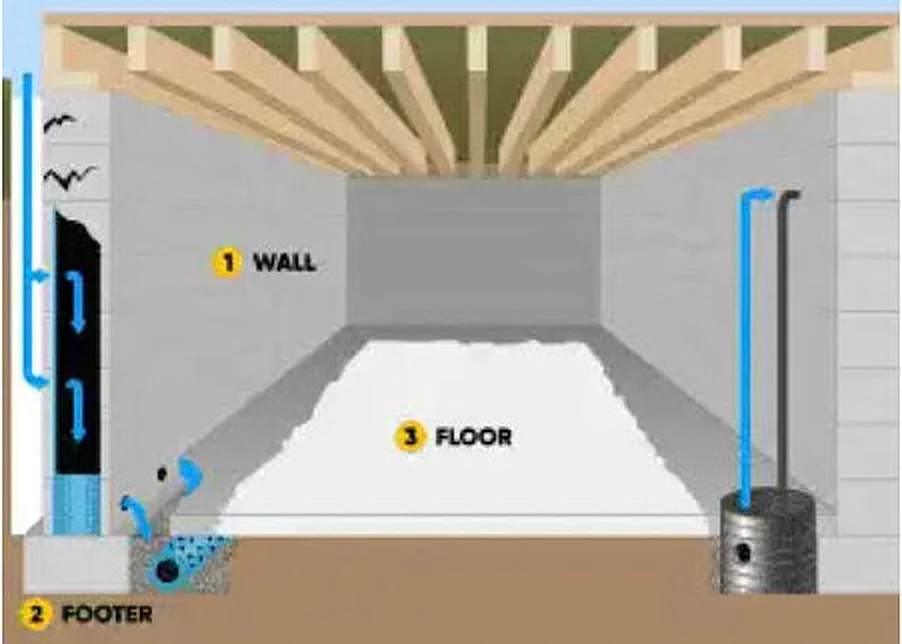
In this scenario, work is performed from the inside of the basement. The floor is opened next to the outside walls, and drain tile is installed and surrounded by gravel. The pipe is connected to a sump pump, which discharges the water.
- All work performed from inside the basement
- Floor is opened next to outside walls
- Drain tile installed and surrounded by gravel
- Pipe connected to a sump pump
- Sump pump discharges water away from the home
Things You Need To Know About Basement Waterproofing
What Causes Foundation Cracks?
There are 3 basic reasons for concrete to crack:
Shrinkage – This happens shortly after a house is built. The poured concrete foundation dries too quickly, shrinks and hairline cracks appear.
Settling – Typically this happens for only a short period after the house is built. The foundation is placed onto ground that still wants to compress. If the compression is minor, the cracks usually are also minor. However, if the ground continues to compress for a while, the existing foundation cracks get progressively wider and new ones may appear over time.
Movement – This is the most common cause of cracks we see. When the ground around the foundation moves and shifts, it causes cracks. As movement continues, these cracks worsen and multiply.
Are Floor Cracks Different Than Wall Cracks?
Yes. Cracks in basement floors may happen for the same reasons as above, but they are different than wall cracks.
Floor cracks typically don’t leak unless an excessive amount of water is accumulating under your basement floor. If you have this problem, consider installing a below the floor drainage system. Before you do that though, make sure you check your sump pump. Many times water coming through the cracks in the floor is a sign your sump pump has stopped working properly.
Why floor cracks are harder to seal: Sealing basement floor cracks is difficult, if not impossible. Any waterproofing product you try to stick to the surface of the floor will eventually fail because the constant wetness of the concrete will keep it from adhering well or permanently. The problem is that the best topical crack repair is one applied on the side of the concrete where the water first enters. Unfortunately, in the case of basement floor cracks, the water is entering from the underside that you can’t reach.
Does The Type of Foundation Matter?
Absolutely. Crack repair methods depend on the type of foundation that’s breaking.
Poured Concrete Foundations: Cracks in a poured concrete foundation can be filled with a flexible, expanding urethane sealant using an injection method because these walls are solid and monolithic.
Block, Brick, or Stone Foundations: Cracks in block, brick, or stone cannot be injected because those walls are made up of many pieces, much like a puzzle, that are held together with mortar which is porous. Cracks in these foundations are best repaired from the outside using a flexible, trowel-on elastomeric membrane. If outside repairs aren’t practical or affordable, then a tear resistant liner can be installed inside to protect your basement from moisture seeping in. An Interior Drainage System also needs to be installed so the moisture that accumulates behind the liner has somewhere to drain.
What About Epoxy Repairs?
Can Previously Repaired Cracks Be Fixed Again?
Should I Fix All My Cracks at Once or Just the Leaking Ones?
Fix them all at once. Here’s why:
All cracks eventually leak. Fixing only the leaking ones just delays the inevitable, and costs more because you have to pay more than once to bring the repairman out again.
Water seeks the path of least resistance. If there are multiple cracks some will provide less resistance to the water than others so they leak first. Once the cracks are sealed, the water will look for the next easiest path which is typically the cracks that weren’t previously leaking.
Save money: When you are having cracks repaired, take advantage of quantity discounts usually available and have them all fixed at once.
READY FOR A DRY BASEMENT?
Join thousands of satisfied New England homeowners who have trusted Keller Waterproofing since 1972!


Schedule Your No Obligation Free Estimate Today!
When you need experience, we have you covered.
- No Subcontacting, Direct Service
- Family-Owned, Owner-Involved
- Over 50 Years Experience
- Honest Assessments, Fair Pricing
- Professional Repairs That Last